
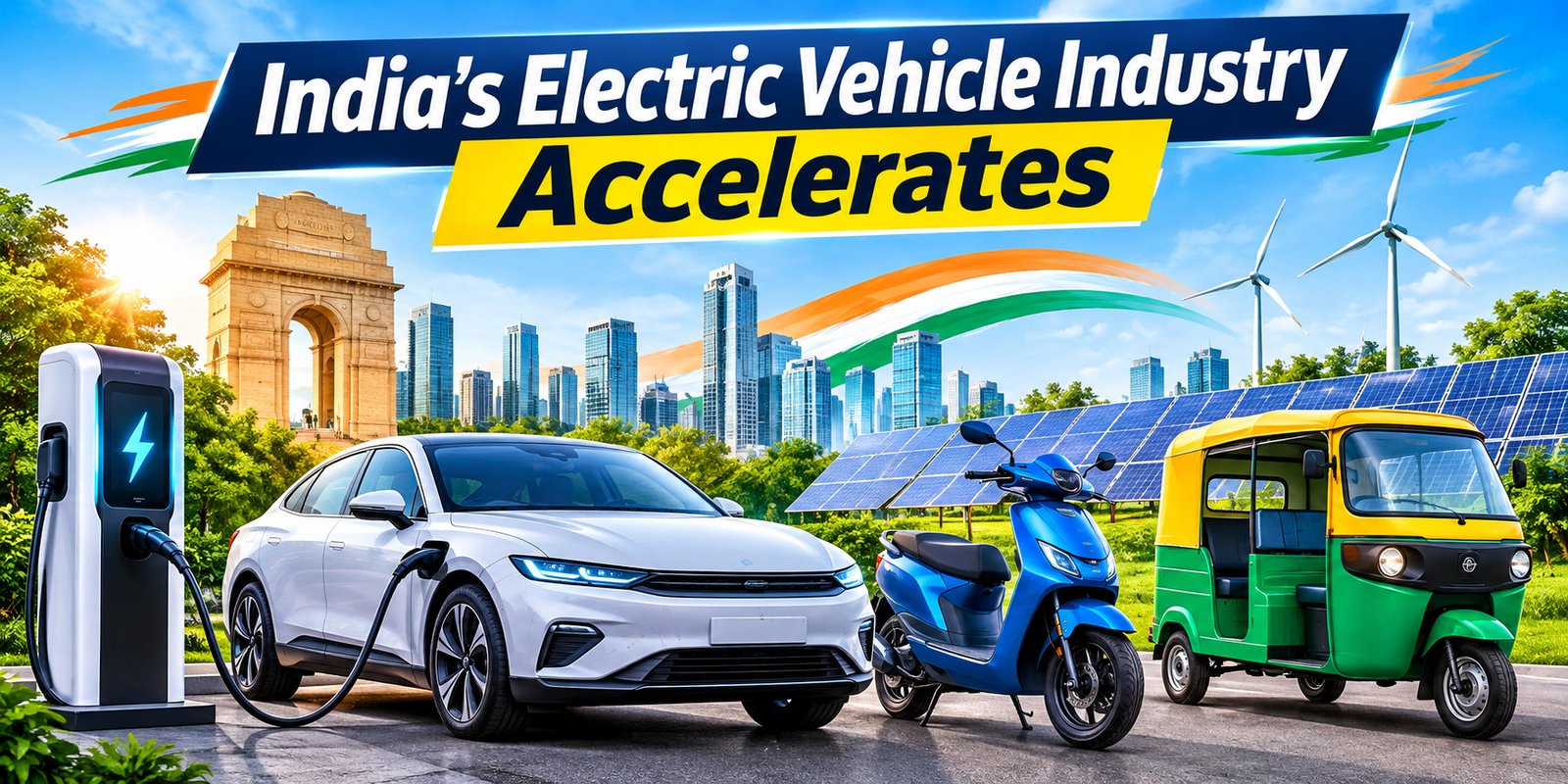
India’s electric vehicle (EV) industry is witnessing remarkable growth, with rising consumer demand, new government initiatives, technological advancements and increasing investments in electric mobility. The country is steadily moving towards cleaner transportation, making electric vehicles one of the fastest-growing segments of the automobile industry.
1. India Records Historic EV Sales Growth
India’s electric vehicle market achieved a significant milestone in September 2026. According to the Federation of Automobile Dealers Associations (FADA), total EV retail sales reached a record 3,33,634 units, registering an impressive 74% year-on-year growth. Electric two-wheelers recorded 2,07,314 units, while electric passenger vehicles reached 36,108 units. Electric three-wheelers also performed strongly, with 86,024 units sold. Overall EV penetration increased to approximately 13%.
2. Bajaj Auto Strengthens Its EV Business
Bajaj Auto is expanding its position in India’s electric two-wheeler market. According to a Reuters report published on October 28, 2026, the company’s second-quarter profit increased by 35.3% year-on-year. Its electric vehicle business contributed nearly 35% of domestic revenue. The company is also planning to increase monthly Chetak electric scooter production capacity to approximately 80,000 units by the fourth quarter, reflecting growing confidence in electric mobility.
3. Delhi Expands EV Charging Infrastructure
Delhi is taking important steps to strengthen its electric vehicle ecosystem. The Ministry of Heavy Industries has approved 382 locations for establishing EV charging infrastructure in the national capital. These locations will support electric two-wheelers, three-wheelers and four-wheelers. The initiative is expected to improve charging accessibility and encourage more people to adopt electric transportation.
4. Competition and Technology Continue to Grow
Leading automobile manufacturers, including Tata Motors, Mahindra, Bajaj Auto, TVS Motor, Ather Energy and Ola Electric, are competing to introduce better electric vehicles. Companies are focusing on improved battery technology, longer driving ranges, faster charging, safety features and affordable pricing.
Lithium-ion batteries, advanced Battery Management Systems (BMS), battery recycling and local battery manufacturing are also becoming important areas of investment.
5. Bright Future for India’s EV Industry
The coming years could bring significant opportunities for electric vehicle manufacturers, battery producers, charging infrastructure companies and component suppliers. However, affordable battery costs, charging availability, battery safety and after-sales services will remain important challenges.
India’s EV industry is entering an exciting phase. Strong sales growth, expanding infrastructure and technological innovation indicate that electric mobility will play an increasingly important role in the country’s transportation future.
#ElectricVehicle #EVNews #LatestEVNews #EVIndia #ElectricMobility #EVIndustry #TataMotors #MahindraEV #BajajChetak #TVSElectric #AtherEnergy #OlaElectric #LithiumBattery #BatteryTechnology #EVCharging #GreenEnergy #CleanEnergy #SustainableMobility #FutureOfTransportation #IndiaAutomobileIndustry