
India’s Electric Vehicle Market Continues to Expand
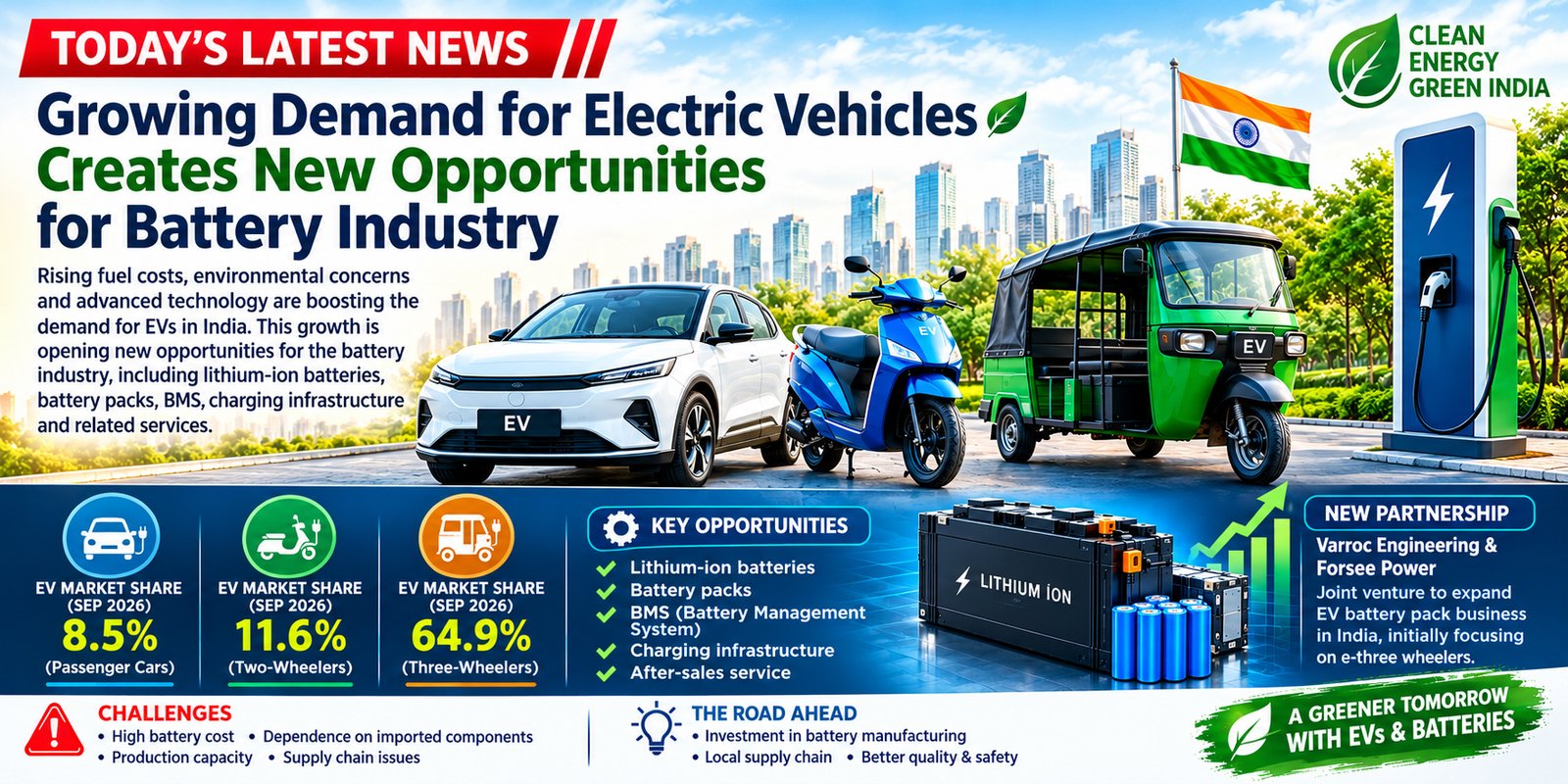
India’s electric vehicle (EV) industry is creating new opportunities for automobile manufacturers, battery producers, and clean energy businesses. Rising fuel costs, growing environmental awareness, and advances in battery technology are encouraging consumers to consider electric cars, scooters, and e-rickshaws.
The expansion of electric mobility is also increasing the importance of reliable batteries, charging infrastructure, and after-sales services.
Electric Three-Wheelers Lead the Transition
According to reported September 2026 figures, electric vehicles accounted for approximately 8.5% of new passenger car registrations, 11.6% of two-wheeler registrations, and 64.9% of three-wheeler registrations in their respective categories.
These figures highlight the significant role of electric three-wheelers in India’s transition to cleaner transportation, particularly in the e-rickshaw and commercial mobility segments.
New Opportunities for the Battery Industry
The growing adoption of EVs is creating demand for several battery-related products and services, including:
- Lithium-ion batteries: Essential for powering electric vehicles.
- Battery packs: Integrated systems designed to deliver reliable power.
- Battery Management Systems (BMS): Technologies that monitor battery performance, temperature, and safety.
- Charging infrastructure: Equipment and services supporting convenient vehicle charging.
- Battery servicing: Maintenance, diagnostics, repair, and recycling solutions.
Indian battery manufacturers can benefit by improving product quality, developing efficient production processes, and strengthening their domestic supply chains.
New Industry Partnership
On October 16, 2026, automobile technology company Varroc Engineering announced a joint venture with France-based Forsee Power to expand its electric vehicle battery pack business in India.
The partnership will initially focus on electric three-wheelers, with potential expansion into other vehicle categories in the future. This development highlights the growing interest in India’s EV battery market and the importance of technology partnerships.
Challenges Facing the Industry
Despite strong growth opportunities, the industry faces several challenges, including high battery costs, dependence on imported components, production capacity limitations, and supply chain disruptions.
Manufacturers must also focus on battery safety, durability, warranty support, and reliable after-sales service to build customer confidence.
The Road Ahead
India’s electric mobility sector could create further investment opportunities in battery manufacturing, energy storage, charging stations, and battery recycling. Companies that focus on innovation, cost efficiency, safety, and local production will be better positioned to compete in this evolving market.
#EVNews #ElectricVehicles #BatteryIndustry #LithiumIonBattery #EVIndia #BatteryManufacturing #ElectricMobility #BatteryTechnology #ERickshaw #CleanEnergy #AutomotiveIndustry #GreenEnergy #LatestNews2026