
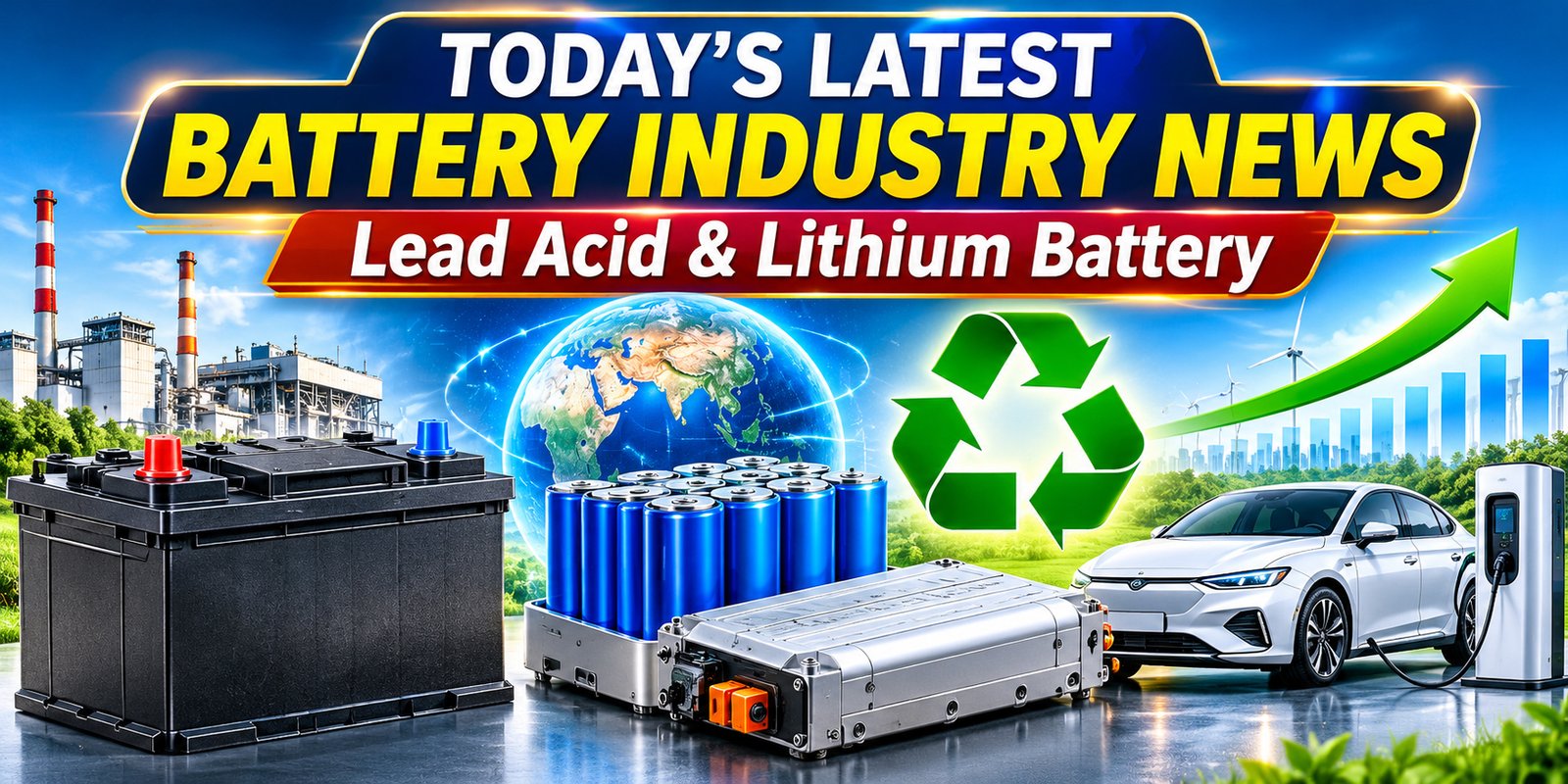
The global battery industry is witnessing significant developments in lead-acid and lithium-ion battery technologies. Government policies, recycling regulations, domestic manufacturing investments and growing electric vehicle (EV) demand are shaping the future of the battery market.
1. India Introduces New Restrictions on Battery Waste Exports
On November 11, 2026, the Indian government announced an immediate ban on exports of unsorted waste and scrap from certain battery categories, including lithium-ion battery black mass. The Directorate General of Foreign Trade (DGFT) changed the export classification from ‘Free’ to ‘Prohibited’ until further orders. This move is expected to encourage better domestic management of battery waste and support India’s battery recycling ecosystem.
2. Lead Acid Battery Industry Faces Changing Global Market Conditions
The global lead market is experiencing a shift in supply and demand. According to forecasts presented by the International Lead and Zinc Study Group (ILZSG), the global refined lead surplus could increase from approximately 90,000 tonnes in 2026 to 163,000 tonnes in 2027.
India continues to emerge as an important market for lead-acid batteries. Growing automobile ownership, two-wheelers, three-wheelers, commercial vehicles and inverter battery requirements are supporting demand.
Lead-acid batteries remain essential for automotive starting systems, UPS applications, telecom infrastructure, inverters and backup power solutions.
3. India Strengthens Lithium Battery Manufacturing
India is taking important steps towards developing its domestic lithium battery supply chain. On November 4, 2026, the Union Cabinet approved an incentive programme worth ₹2,814 crore to encourage domestic processing of lithium and nickel.
The initiative aims to reduce dependence on imported critical minerals and strengthen India’s battery manufacturing capabilities.
4. Growing Opportunities in Battery Recycling
Battery recycling is becoming an increasingly important part of the energy storage industry. Both lead-acid and lithium-ion batteries offer opportunities for material recovery and resource conservation.
Lead-acid batteries already benefit from established recycling infrastructure, while lithium-ion recycling is developing rapidly as EV battery usage increases.
5. Future Outlook: Lead Acid and Lithium Batteries
The battery industry’s future will depend on technological innovation, efficient recycling, manufacturing investments and changing consumer requirements.
Lithium batteries are gaining popularity because of their high energy density, lightweight design and suitability for electric vehicles and modern energy storage systems.
Meanwhile, lead-acid batteries will continue to play an important role in affordable backup power, automotive applications and inverter markets.
#BatteryNews #LeadAcidBattery #LithiumBattery #BatteryIndustry #BatteryTechnology #EVBattery #BatteryRecycling #EnergyStorage #LithiumIon #ElectricVehicles #BatteryManufacturing #IndiaBatteryMarket #RenewableEnergy #InverterBattery #BatteryBusiness #LatestNews2026