
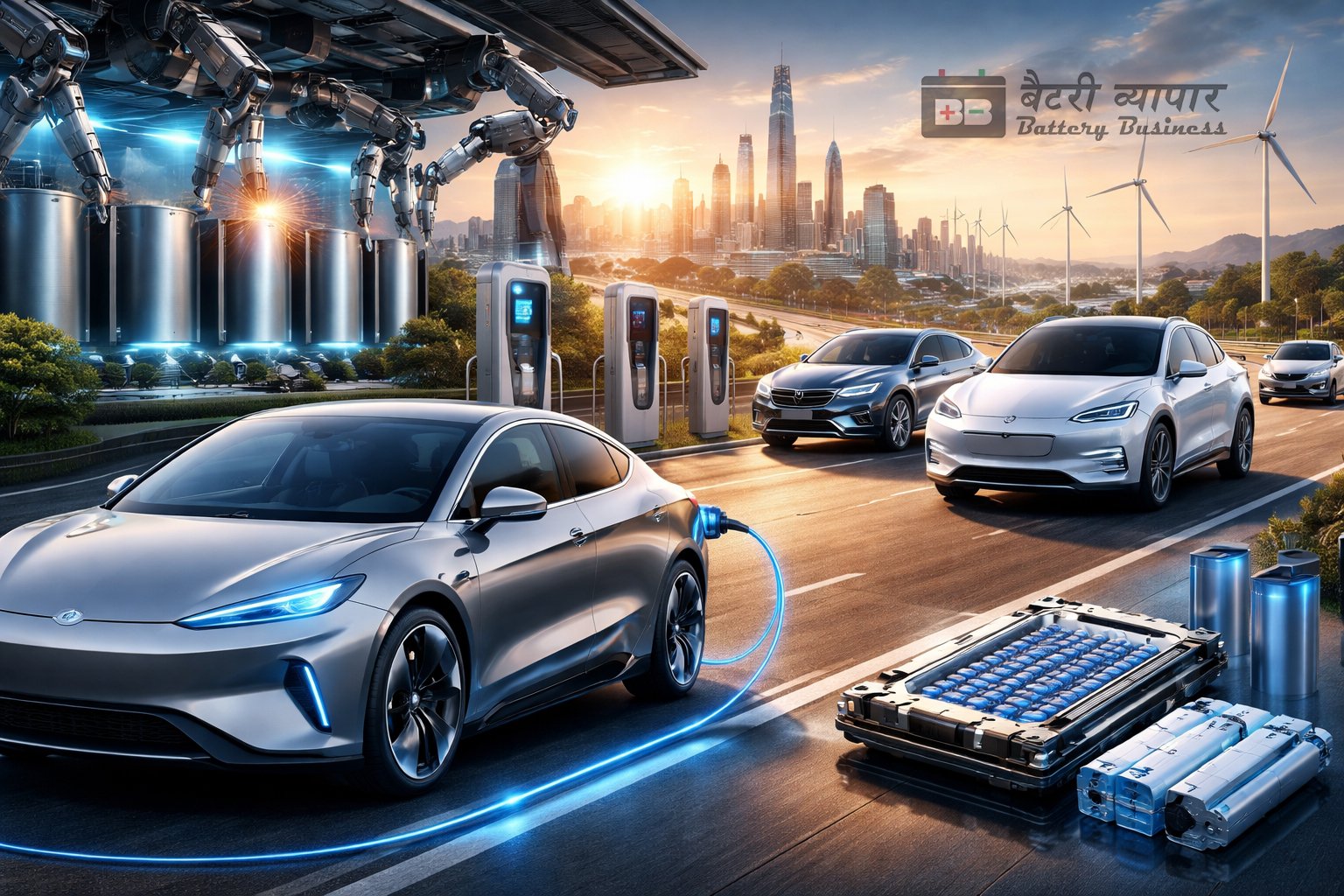
The global electric vehicle (EV) industry is moving through a transformative phase, shaped by technology breakthroughs, fierce competition, trade policy shifts, and expanding infrastructure. One of the biggest headlines is the continued rise of China’s EV giant BYD, which is strengthening its challenge to Tesla in global EV leadership. BYD’s export growth in Europe and other international markets has intensified, while reports suggest Tesla is facing stronger pressure in market share, particularly as Chinese automakers expand aggressively.
Another major development is ultra-fast charging innovation. BYD’s new flash-charging technology, capable of adding substantial charge in around five minutes under certain conditions, has sparked major excitement in the industry. This breakthrough could address one of the biggest barriers to EV adoption—charging time—and may push other automakers to accelerate similar technologies.
Battery technology is also evolving rapidly. Global attention is shifting toward next-generation battery chemistry, including solid-state and advanced lithium-metal designs. Several automakers and battery manufacturers are scaling investment in higher-density batteries that promise longer driving range, improved safety, and faster charging. Meanwhile, CATL’s continued expansion signals confidence in long-term battery demand worldwide.
Trade policies are becoming another defining factor in the EV landscape. Tariffs on Chinese-made electric vehicles in Europe and North America are reshaping supply chains and pricing strategies. While some governments see tariffs as protection for domestic industries, others warn they may slow affordability and broader EV adoption. This trade tension is increasingly becoming part of the global EV growth story.
In the United States, battery manufacturing remains a major focus. Automakers and energy companies are expanding domestic battery production, though dependence on Chinese components remains significant. This is driving renewed efforts to localize supply chains and secure raw materials. Industry observers say the next few years will determine how quickly North America can reduce its battery dependency.
European EV markets are also seeing major momentum. Chinese brands are gaining ground, while European manufacturers are responding with new product launches, software upgrades, and efficiency-focused models. At the same time, autonomous and driver-assistance technologies are becoming more integrated into the EV conversation, especially as approvals expand in some regions.
Another interesting trend is the shift from “EV adoption” to “EV competition.” The discussion is no longer simply about convincing people to switch from internal combustion to electric—it is now about which companies will dominate charging networks, battery ecosystems, software platforms, and global exports. This marks a new stage for the industry.
Looking ahead, analysts believe 2026 could be a defining year for electric mobility. Ultra-fast charging, battery innovation, affordable EV launches, and global manufacturing shifts may push the industry closer to mainstream acceleration. However, geopolitical tensions, raw material costs, and policy uncertainty remain critical risks to watch.
Overall, the EV sector is no longer just growing—it is restructuring the future of transportation.
#ElectricVehicles #EVNews #BYD #Tesla #BatteryTechnology #FastCharging #SolidStateBattery #EVIndustry #ElectricMobility #CleanEnergy #AutomotiveNews #SustainableTransport #CATL #EVCharging #GreenTechnology