

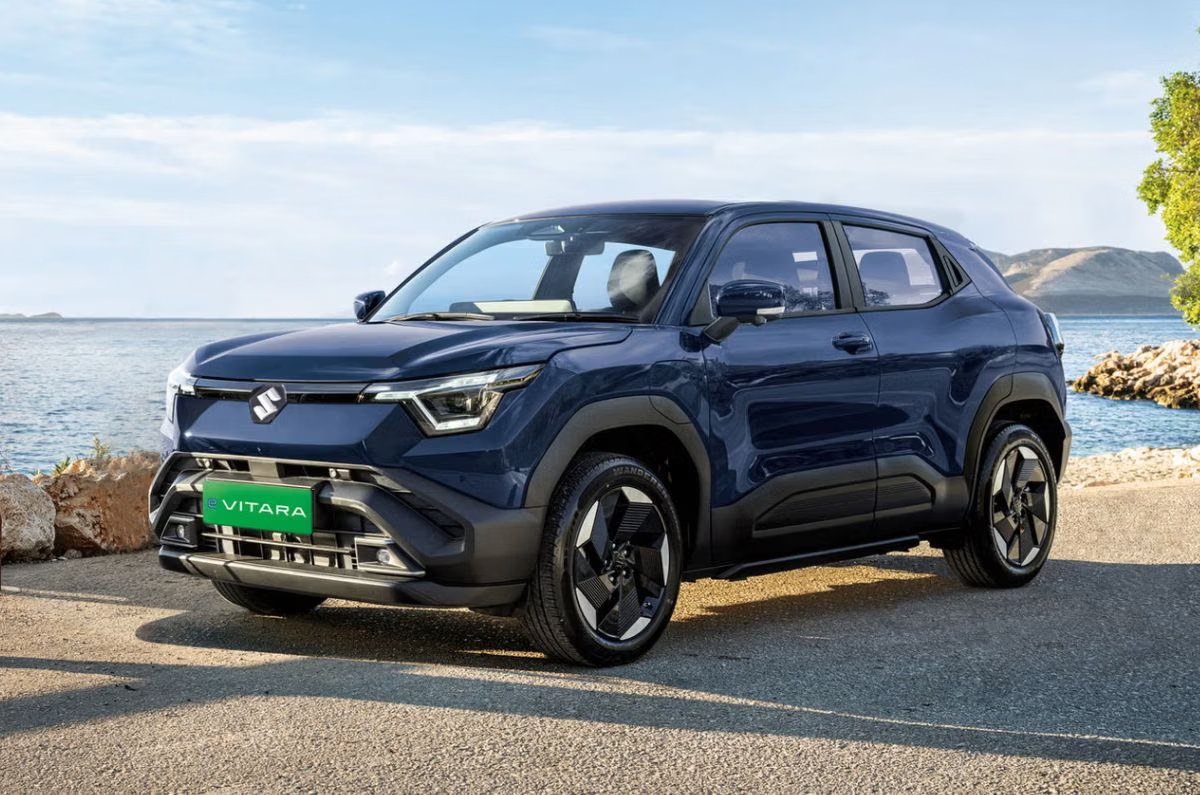
Maruti Suzuki’s highly awaited e-Vitara showcase created significant excitement, but the event ultimately left one major question unanswered — the price. Since Maruti first revealed its EV ambitions, the Indian market has been flooded with competitively priced electric SUVs, prompting the company to rethink its strategy. During a roundtable interaction, Partho Banerjee, Senior Executive Director – Marketing & Sales, defended Maruti’s cautious approach and its delayed entry into the EV segment.
The upcoming e-Vitara—already available in the UK and soon launching in Japan—will be Maruti Suzuki’s first electric SUV for the Indian market. Banerjee says the company wanted adequate charging infrastructure, service readiness, and customer confidence before introducing the vehicle in India.
To support this, Maruti Suzuki has partnered with 13 charging point operators and aggregators, allowing EV owners to access multiple public charging networks through a unified platform. The company already offers more than 2,000 dedicated charging points across 1,100+ cities, backed by partner-run public chargers. By 2030, it aims to provide access to over 1,00,000 public charging stations.
The e-Vitara has earned a 5-star BNCAP safety rating, and although Maruti initially targeted a 500km range, the SUV is now ARAI-certified at 543km. A Battery-as-a-Service (BaaS) option will also be available, with specifics to be revealed closer to launch.
“We might be late,” Banerjee says, “but when we arrive, we will arrive with a roar.”
How loud that roar sounds to customers will ultimately depend on Maruti Suzuki’s execution — once the e-Vitara gets its price tag and its moment of truth.