

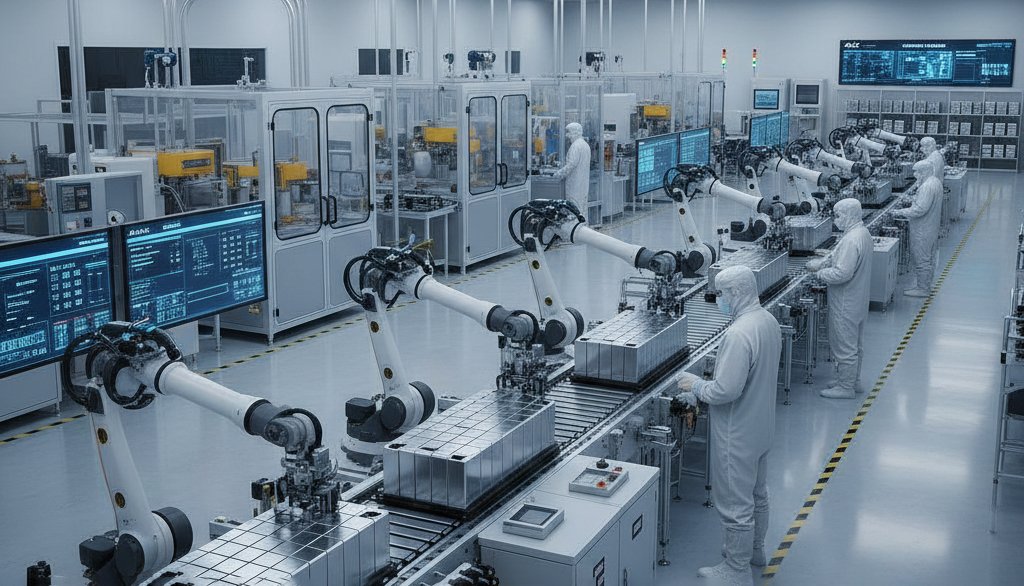
The government is considering changes to its production-linked incentive (PLI) scheme for advanced chemistry cell (ACC) manufacturing, as the programme has not delivered the expected results, Mint reported.
Heavy Industries Minister H.D. Kumaraswamy said the target was to achieve 50 GWh of battery capacity by December 2024, but by June this year, only 1.4 GWh had been commissioned.
Despite delays, Kumaraswamy noted that India’s ACC ecosystem is expanding. Ola Cell Technologies has already set up 1.4 GWh of capacity, and over 10 other companies are working on projects totalling more than 100 GWh.
₹18,100-crore PLI-ACC scheme
Launched in 2021, the ₹18,100-crore PLI-ACC programme aims to boost India’s battery manufacturing capabilities by establishing giga-scale ACC and battery plants with a focus on high domestic value addition.
In 2022, the government allocated 30 GWh under the scheme: Ola Electric received 20 GWh, while Reliance New Energy and Rajesh Exports got 5 GWh each. Reliance was later awarded an additional 10 GWh in September 2024.
The scheme requires companies to localise 25% of battery components within two years, rising to 60% within five years, and to invest ₹225 crore per GWh for their committed capacity.
According to the report, the government has recently issued show-cause notices to approved firms. Most of them have requested an extension of 18 months to meet their targets.
The Ministry of Heavy Industries is weighing the option of giving companies more time and easing localisation rules. A final decision is still pending. Mint also reports that the government may temporarily allow lower-duty imports of cells until domestic manufacturing is ready.
Industry specialists highlight that delays are not limited to factory timelines—there are broader challenges.
India Energy Storage Alliance’s Debmalya Sen told Mint that China’s tight control over graphite exports has slowed India’s battery output and that robust cell manufacturing may still be two years away. He noted that while higher customs duties support domestic production, excessive duties across the supply chain raise costs and make India less competitive—meaning incentives remain important.
The Net Zero Energy Transition Association (NETRA) has urged the government to create a single-window system to help companies navigate equipment procurement, foreign suppliers, and access to critical materials.
(Source :BusinessStandard)