
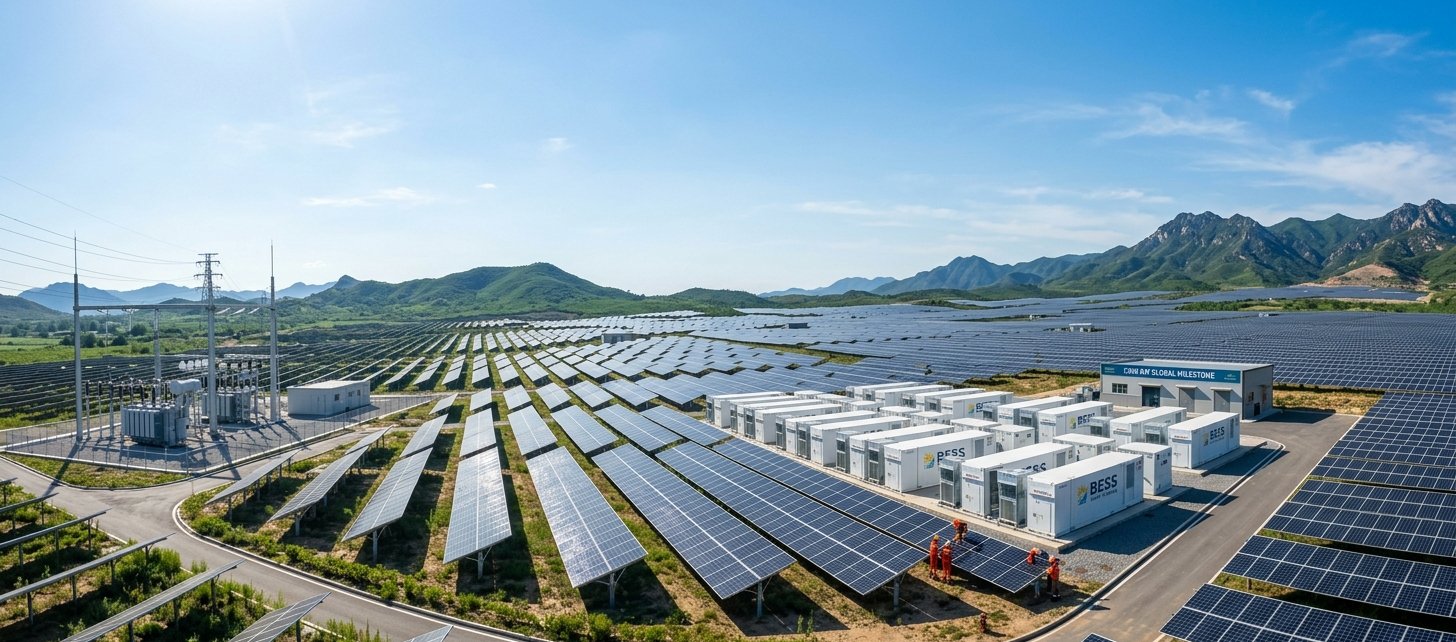
The solar energy landscape in April 2026 is defined by record-breaking capacity and a technological shift that is finally moving from the lab to the rooftop.
1. The 1,000 GW Milestone
As of April 2026, global utility-scale solar capacity has officially surpassed 1,000 GWac. Driven by a massive expansion in 2025, solar is now on track to match wind energy capacity by the end of this year. China and India continue to lead the charge, with India recently ranking third globally in total renewable deployment.
2. Breaking the Efficiency Ceiling
The industry is buzzing over Perovskite-silicon tandem cells, which have now smashed the theoretical “Shockley-Queisser” limit of single-junction silicon.
-
New Record: Researchers have certified cell efficiencies as high as 34.85%.
-
Commercial Shift: Companies like Oxford PV are transitioning these high-efficiency modules (averaging 26.9% at the module level) into the residential market, promising significantly more power from the same rooftop footprint.
3. Industrial Decarbonization in India
Major industrial players are aggressively switching to solar.
-
Wonder Cement recently signed long-term agreements for nearly 200 MWp of solar power, aiming to replace over 60% of its electricity consumption with clean energy.
-
Godrej Enterprises has secured a 98 MWp project in Haryana, the state’s largest open-access installation to date, utilizing advanced bifacial TOPCon modules.
4. The Rise of “Solar + Storage”
2026 is the year of the battery. With grid constraints becoming a bottleneck in Europe and the U.S., the integration of Battery Energy Storage Systems (BESS) has become mandatory for most new utility-scale projects. In the U.S., over 26% of new solar installs now include storage, a figure expected to double by 2030.
#SolarEnergy #RenewableEnergy #GreenTech #Perovskite #SolarPower2026 #Sustainability #CleanEnergyTransition #ClimateAction