
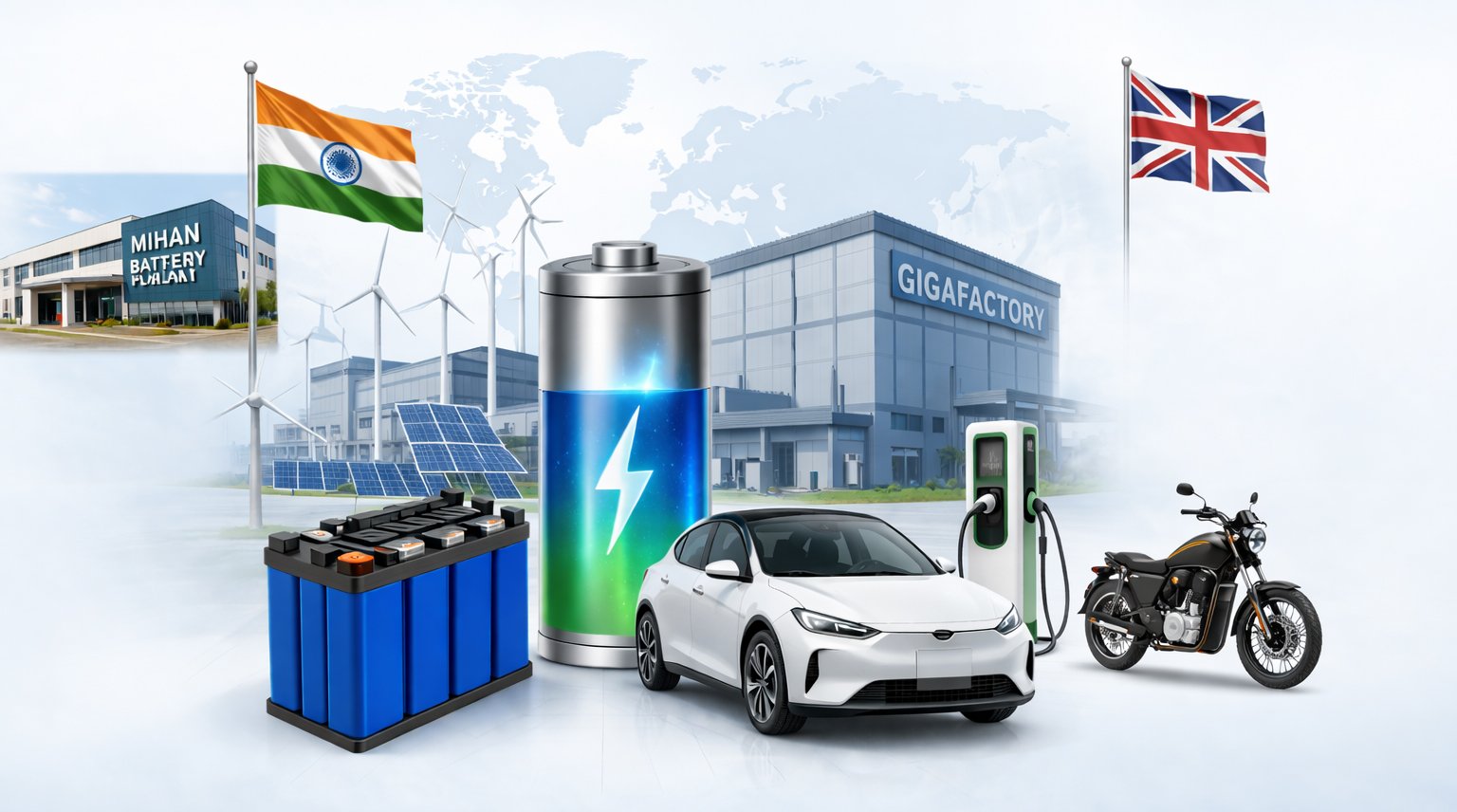
The global and Indian battery industry is witnessing rapid transformation in April 2026, driven by electric vehicles (EVs), renewable energy storage, and strong government policies. From new giga-factories to regulatory changes, the sector continues to evolve at a fast pace.
In India, the battery ecosystem is expanding with fresh investments in lithium-ion manufacturing. A major development is the establishment of a new lithium-ion battery plant in Nagpur’s MIHAN region, which is expected to boost the EV supply chain and generate employment opportunities. At the same time, companies are increasingly focusing on localization of battery components to reduce import dependence and strengthen domestic manufacturing capabilities.
However, challenges remain. Industry experts warn that India could face a significant supply gap in advanced battery cells. Demand is projected to reach 220–260 GWh by 2030, while current operational capacity is still far behind, leading to continued reliance on imports of raw materials and cells. This highlights the urgent need for investment in the entire battery value chain, including cathodes, anodes, and electrolytes.
Globally, major economies are investing heavily in battery infrastructure. The UK government has announced a £380 million grant for a large battery gigafactory by Tata Group’s Agratas unit. This facility will support electric vehicle production and is expected to create thousands of jobs while strengthening Europe’s EV ecosystem. Such investments indicate a global race to secure battery supply chains and reduce dependence on limited suppliers.
In the EV segment, battery technology is becoming a key differentiator. Automakers are launching new electric models with improved battery performance, longer range, and flexible ownership models such as battery subscription. Meanwhile, governments are also tightening regulations. India is planning BS-VII emission norms, which may include stricter rules and safety standards for EV batteries, signaling a more regulated future for the industry.
On the technology front, lithium-ion batteries continue to dominate, but alternatives like lithium iron phosphate (LFP) and sodium-ion batteries are gaining traction due to lower costs and better safety. Globally, battery demand is expected to grow significantly, with the market projected to exceed $200 billion in 2026 and continue expanding rapidly.
In conclusion, the battery industry in 2026 stands at a critical growth stage. While investments and innovation are accelerating, supply chain challenges and regulatory changes will shape the future. Companies that focus on localization, advanced technology, and scalability are likely to lead the next phase of growth in this high-potential sector.
#BatteryIndustry #EVBattery #LithiumIon #EnergyStorage #ElectricVehicles #CleanEnergy #IndiaGrowth #Gigafactory #RenewableEnergy