
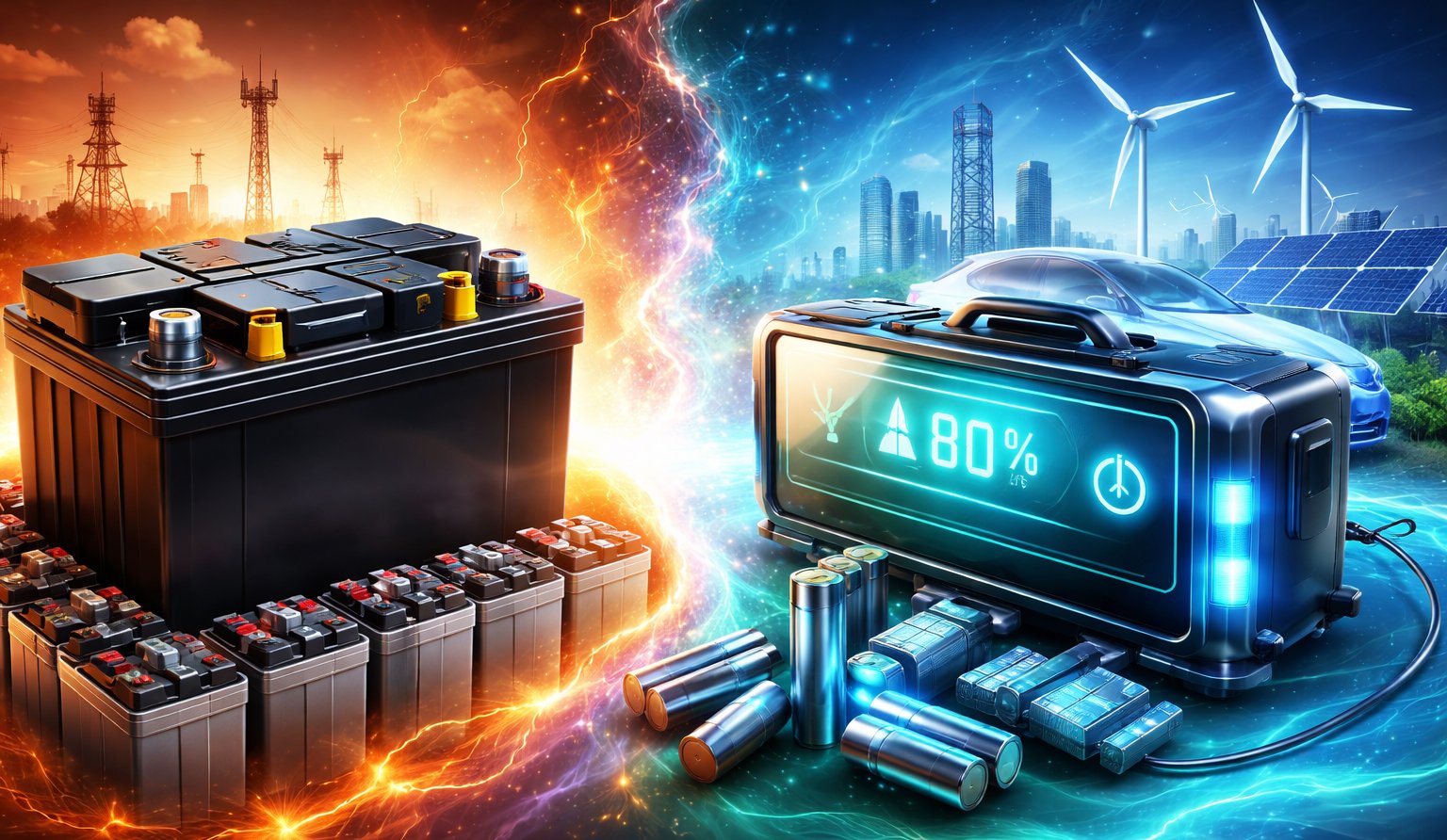
The global battery industry is undergoing a rapid transformation in 2026, with both lead-acid and lithium-ion technologies evolving to meet rising energy demands. While lithium batteries dominate innovation, lead-acid batteries continue to hold a strong position in traditional and backup power applications.
The global lead-acid battery market is witnessing steady growth, expected to reach over $56 billion in 2026, driven by increasing demand from automotive, telecom, and power backup sectors. Asia-Pacific, particularly India and China, remains the largest market due to expanding infrastructure and rising vehicle ownership. Despite competition from lithium-ion batteries, lead-acid batteries are still widely preferred for their low cost, reliability, and well-established recycling ecosystem.
However, the industry is facing challenges. Environmental concerns and stricter regulations on lead usage are pushing manufacturers to adopt cleaner technologies. At the same time, global oversupply of lead metal and falling prices are reshaping the financial landscape of the industry, even as demand grows slowly at around 0.5% annually.
On the other hand, lithium-ion batteries continue to dominate innovation and future mobility. Recent breakthroughs in battery design, such as advanced silicon-carbon anodes, promise significantly higher energy capacity and longer lifespan for electric vehicles and portable electronics. These innovations could dramatically improve EV range and charging efficiency in the coming years.
Despite their advantages, lithium batteries are also under scrutiny due to safety concerns. Experts are raising alarms over increasing incidents of battery-related fires caused by “thermal runaway,” especially in e-bikes and consumer devices. Governments and industry leaders are now being urged to implement stricter safety standards and better recycling practices.
Interestingly, a hybrid trend is emerging where users are replacing traditional lead-acid batteries with lithium iron phosphate (LiFePO4) solutions for better performance and longer life. These batteries offer higher efficiency and stable power delivery, making them popular in EV conversions and solar energy systems.
Looking ahead, the battery market is expected to diversify further with new technologies like solid-state and sodium-ion batteries entering the scene. While lithium remains dominant, lead-acid batteries will continue to serve as a cost-effective backbone for backup power and industrial applications.
#BatteryNews #LeadAcidBattery #LithiumBattery #EVTechnology #EnergyStorage #SolarEnergy #BatteryIndustry #ElectricVehicles #CleanEnergy #PowerBackup #LiFePO4 #TechNews #IndiaIndustry