

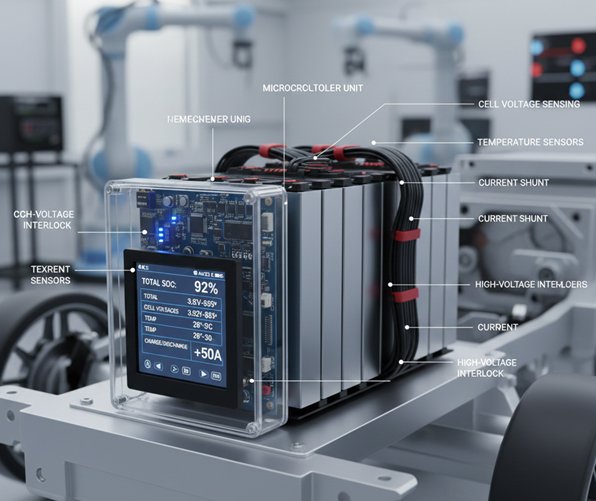
As electric mobility becomes central to the automotive industry, the systems responsible for managing battery performance have evolved from supporting components to core technological pillars. The automotive battery management systems (BMS) market is expanding rapidly, driven by rising EV adoption, stricter safety requirements, and continuous advancements in battery chemistry. But what forces are shaping this transformation, and where is the market headed next?
Market Overview
According to Research Intelo, the global automotive battery management systems market was valued at USD 7.8 billion in 2024 and is expected to reach USD 25.1 billion by 2033, expanding at a CAGR of 15.2%. This strong growth reflects the increasing need for advanced BMS solutions across electric and hybrid vehicle platforms.
What Is Driving the Accelerated Demand for BMS?
- Global Transition Toward Electrification:
The rapid proliferation of electric vehicles (EVs) and hybrid electric vehicles (HEVs) has created a critical demand for advanced BMS to enhance battery longevity, ensure safety, and optimize performance. With governments tightening emissions regulations and incentivizing EV adoption, automakers are heavily investing in battery technologies and management systems.
BMS play a pivotal role in monitoring battery health, managing charge cycles, preventing overheating, and maintaining overall vehicle reliability.
- Advancements in Battery Chemistry and Management Algorithms:
The shift from conventional lead-acid to lithium-ion and nickel-based batteries requires sophisticated BMS capable of handling higher energy densities and complex charge, discharge patterns. Innovations such as wireless BMS, real-time diagnostics, and AI-enabled predictive maintenance are boosting efficiency and reducing lifecycle maintenance costs.
- Rising Focus on Vehicle Safety:
Increasing incidents of battery failures, including thermal runaway and fire risks, have prompted regulators and industry stakeholders to implement stringent safety standards. This heightened focus on safety has accelerated the adoption of advanced BMS technologies across both OEM and aftermarket channels.
How Are BMS Architectures Evolving?
- Centralized BMS
Centralized architectures, where a single control unit manages all battery cells, remain popular in small and medium-sized battery packs. Their simplicity, lower cost, and ease of integration make them well-suited for passenger vehicles and entry-level EVs.
- Distributed BMS
Distributed systems are increasingly deployed in commercial vehicles and high-performance EVs. By positioning control units across individual modules or cell groups, these architectures offer improved fault isolation, enhanced safety, and better scalability for large or complex battery configurations.
- Modular BMS
A hybrid between centralized and distributed designs, modular BMS assigns a management unit to each battery module while maintaining communication with a central controller. This architecture offers flexible configuration, improved scalability, and streamlined integration of emerging battery technologies.
Which Industries Are Expected to See the Fastest Adoption?
Beyond passenger EVs, BMS adoption is accelerating across multiple automotive segments:
- Commercial Fleets:Electrification of buses, trucks, and delivery vans requires robust BMS capable of handling large battery capacities and rigorous operating cycles.
- Two-and Three-Wheelers: Rapid EV penetration in Asia and Europe fuels demand for compact, efficient BMS solutions tailored for micro-mobility.
- Hybrid Electric Vehicles (HEVs): Hybrids continue to rely heavily on specialized BMS systems designed for rapid cycling and frequent power balancing.
What Challenges Could Impact Market Expansion?
Despite strong growth prospects, the market faces several headwinds:
- High Cost of Advanced BMS Solutions
Cutting-edge BMS technologies, particularly those used in high-energy battery chemistries, can increase overall vehicle cost, posing challenges in price-sensitive markets.
- System Integration and Interoperability Issues
Modern vehicles are increasingly complex, and integrating BMS with various electronic control units (ECUs), sensors, and communication layers can be technically challenging.
- Cybersecurity Vulnerabilities
As vehicles become more connected, BMS systems face potential security threats that require robust protection mechanisms.
- Lack of Standardized Protocols
The absence of unified global standards for BMS design, testing, and communication can hinder scalability and slow the entry of new players.
Ongoing R&D investments, cross-industry collaboration, and regulatory alignment will be essential for overcoming these challenges.
Where Is the Market Heading Next?
Several trends indicate a shift toward smarter and more connected BMS technologies:
- AI-Enabled Predictive Management
Machine-learning-driven diagnostics are poised to enhance battery life forecasting, improve range accuracy, and optimize charging cycles.
- Integration With Vehicle-to-Everything (V2X) Systems
Future BMS solutions may interact directly with charging infrastructure, grid networks, and cloud platforms to enable intelligent energy management.
- Move Towards Standardization and Interoperability
Unified global standards will facilitate safer, more consistent BMS deployments across markets.
- Transition to Solid-State Batteries
As solid-state battery commercialization advances, BMS will require redesigning to manage new thermal and electrical characteristics.